
The Signal vs. Noise Filter
The Noise: “Gemini 3 can now think deeper!” (Great, but does it buy products?) Also, the generic advice on “AI Campaign Structure” is just Google telling you to broaden match types again.
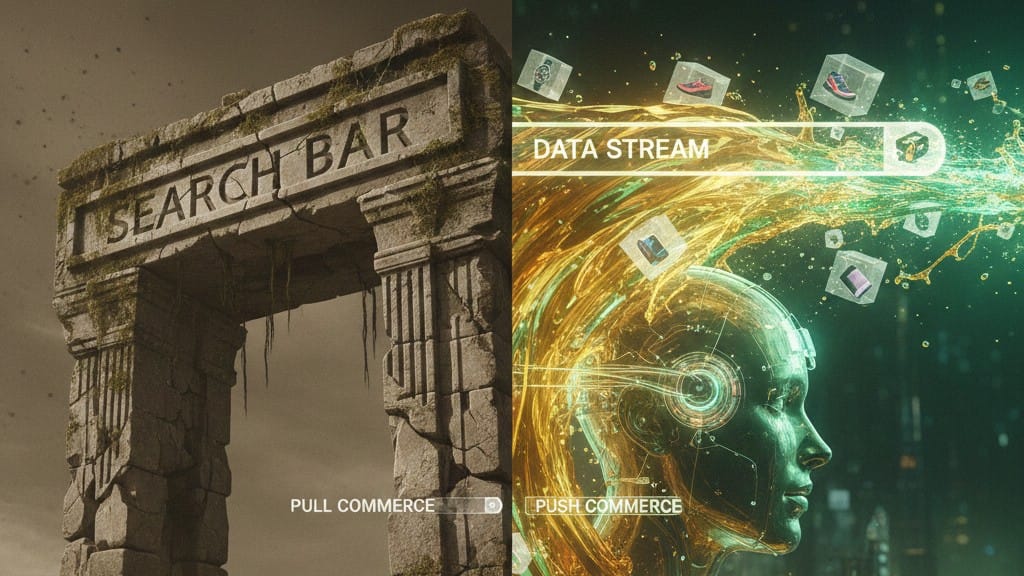
The Signal: The Discover Core Update (Feb 2026) combined with the new Digital Advertising & Commerce protocols. This is the shift from “Intent-Based Search” (Pull) to “Predictive Commerce” (Push).
The Deep Dive (The Core Update)
The Update: Google Search Central: Discover Core Update (Feb 2026).
For the last 5 years, Discover was a “News Feed.” It was for publishers.
The Mechanism Shift
This Core Update fundamentally alters the ranking logic of the feed. Google is no longer just predicting “What do you want to read?” It is predicting “What are you about to buy?”
By integrating the Shopping Graph directly into the Discover prediction layer (hinted at in the Digital Advertising & Commerce 2026 release), Google is turning the “Zero-Query” surface into a transactional layer.
The Architect’s Reality
This introduces Massive Volatility.
Search traffic is stable (people search when they have a problem).
Discover traffic is bursty and algorithmic.
If your brand relies on “answering questions” (SEO), you are about to lose visibility. You need to optimize for “Entity Desire”—convincing the machine that your product is the logical next step for the user, before they even ask for it.
Business Impact (The “So What?”)
- For CEOs: Expect your “Organic Traffic” charts to look like a heart attack (spikes and drops) rather than a smooth curve. This is the nature of predictive feeds. Do not fire your SEO team when traffic drops 30% on Tuesday; check if the commercial intent traffic rose.
- For CMOs: Your “Content Strategy” is obsolete. Blog posts don’t win in Discover. Visual Commerce Assets do. If you don’t have high-fidelity vertical video and lifestyle imagery tagged with Merchant Center data, you are invisible in this new feed.
- For Tech Stacks: The GTIG Report on AI Cyber Attacks (Feb 2026) dropped a warning: “Synthetic Traffic” is at an all-time high. With Discover being a “push” channel, bot nets are now mimicking “scroll behavior.” You must tighten your server-side validation.
The Architect’s Action Plan
- The “Visual Schema” Audit: Ensure your product images in Merchant Center are not just white-background packshots. The Discover algorithm craves “Lifestyle” context. Feed it.
- Server Stress Test: Discover traffic hits in waves (10k visits in 10 minutes, then zero). If your server auto-scaling is sluggish, you will crash during your viral moment.
- Bot Filtering: Reference the GTIG Report. Update your WAF (Web Application Firewall) rules. We are seeing AI bots that “read” content to train models; block them if they aren’t converting.
”Search is about answering questions. Discover is about predicting desires. If you wait for the user to ask, you’ve already lost the sale.”