

The Signal vs. Noise Filter
The Noise: The tech world is cheering for the release of Gemma 4 and the integration of the Veo and Lyria generation models into Google Vids. Agencies are celebrating the fact that they can now generate infinite video ad variations for zero dollars.
The Signal: Google’s internal data just dropped a warning flag via their Q2 thesis on the Future of Attention and Creator-Led Growth. Google is telling you directly: We gave you the tools to make infinite synthetic content, but the ad auction is about to heavily penalize it. The algorithm is placing a mathematical premium on human-centric, Creator-driven signals.
The Deep Dive (The Core Update)
Let’s dismantle the architecture of this week’s Think With Google data drop.
The Mechanism Shift: From Volume to Authenticity
In Q1, we focused on the plumbing—how data moves from your CRM to the bidding engine. In Q2, Google is addressing the payload: the creative itself.
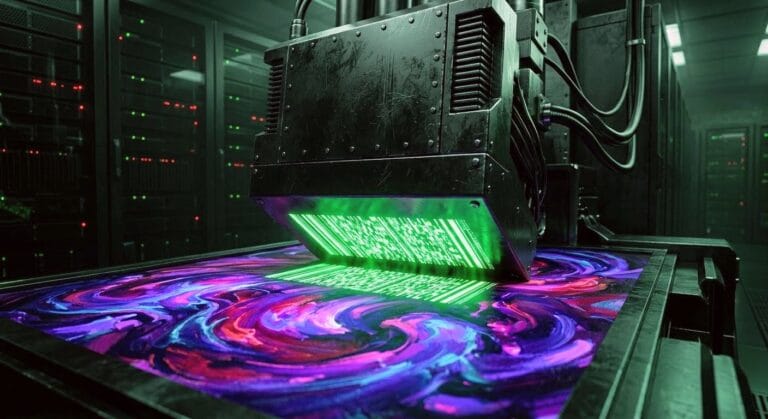
The CMO AI Workflows and Future of Attention reports highlight a critical market paradox. Because generative AI tools have driven the cost of production to zero, the ad auction is flooded with highly optimized, visually perfect, but entirely synthetic garbage.
Consumers have developed total ad-blindness to generative media.
To combat this, the YouTube and Demand Gen algorithms are reweighting their ranking logic. They are no longer prioritizing “perfectly generated” assets. As outlined in the YouTube Creator Marketing thesis, the algorithm is explicitly searching for the deterministic signal of a Human Creator.
The Architect’s Reality:
If your Q2 strategy is to use Google Vids and AI workflows to blast 1,000 variations of a faceless product video into Performance Max, you are going to burn cash. The algorithm will attempt to serve it, the user will swipe past the synthetic visual in 0.4 seconds, and your “Future of Attention” score will crater. You will be relegated to bottom-tier, run-of-network inventory.
You must transition your creative pipeline from “Asset Generation” to “Creator Integration.” The authentic human face, speaking directly to the camera, is the new premium signal in a sea of algorithmic noise.
Business Impact (The “So What?”)
- For CEOs: Expect your traditional “production budget” to become obsolete. Reallocate the money you used to pay agencies for glossy, high-end commercial shoots (or purely AI-generated spots) directly into Creator partnerships. You are buying their human trust signal, not just their reach.
- For CMOs: Your “AI Workflow” shouldn’t be generating 1,000 static banners. It should be automating the pipeline of sourcing, licensing, and ingesting Creator-led UGC (User Generated Content) into your Performance Max and App campaigns.
- For Tech Stacks (App Advertisers): As highlighted in the App Advertising Objections document, App campaigns are brutal, automated environments. If your app ingestion feed is filled with static screenshots or synthetic gameplay, you will lose the auction. You must pipe Creator-led video assets directly into the App campaign infrastructure to break the scroll pattern.
The Architect’s Action Plan
- The Synthetic Audit: Audit your current active PMax and Demand Gen asset groups. If they rely heavily on faceless, AI-generated imagery or standard stock video, prepare for severe yield decay this quarter.
- Establish a CaaS (Creator-as-a-Service) Pipeline: You need a high-frequency pipeline to ingest raw, unpolished Creator videos. The algorithm favors native, lo-fi human content over highly edited corporate videos.
- Map the Creator Signal: Ensure your UTM architecture and Offline Conversion Tracking (OCT) are set up to measure the incremental lift of specific Creator assets, not just the campaign as a whole. You need to know which human face is actually driving margin.
”When the cost of generating content drops to zero, human attention becomes the most expensive asset on the balance sheet. The algorithm is now optimizing for the human, not the machine.”